Logging Quality
Logging Quality shows how consistently you've been tracking. Patterns are only as good as your data—if you log meals but forget symptoms (or vice versa), Intestigator can't connect them.
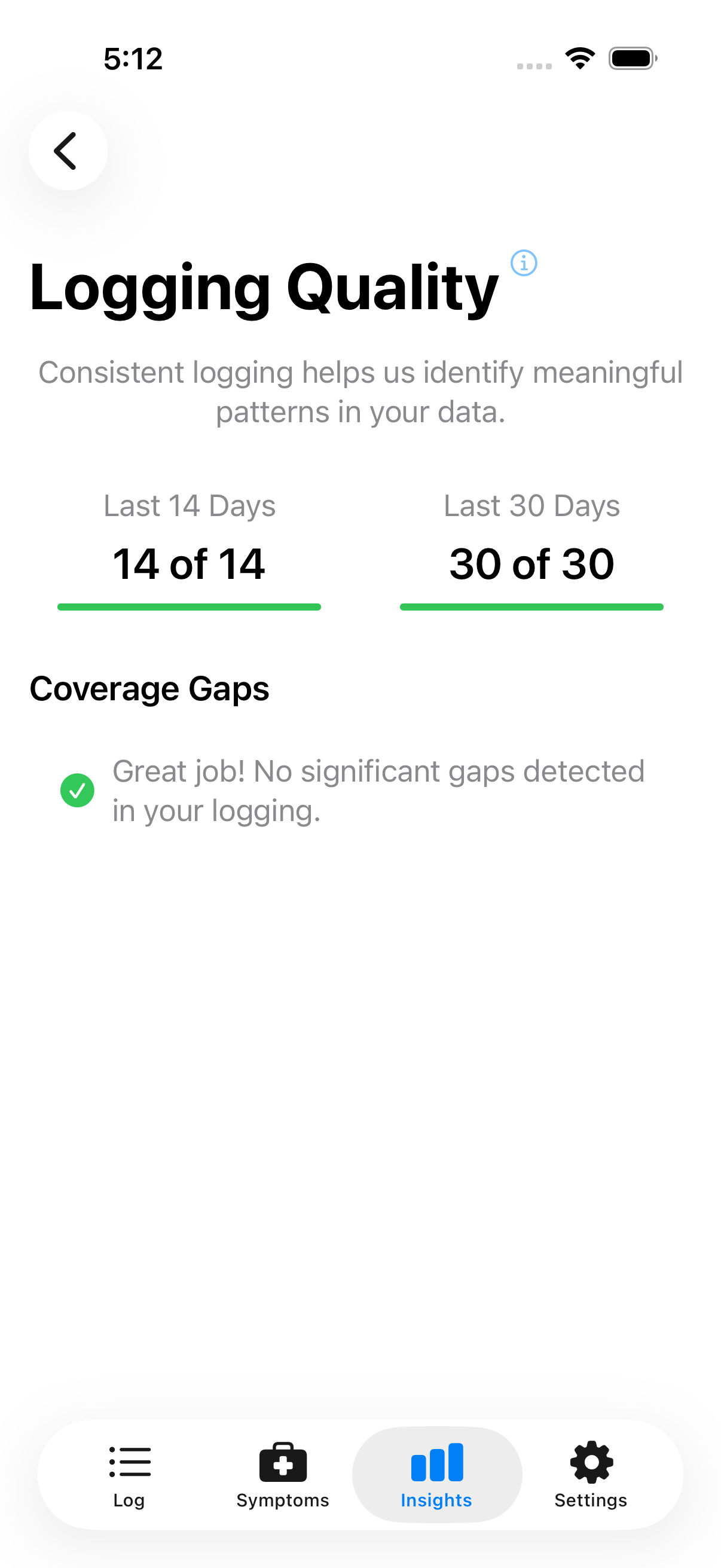
The logging quality view shows your tracking consistency
What You'll See
Days logged: How many of the last 14 and 30 days have at least one entry (meal or symptom).
Coverage Gaps
Intestigator flags potential issues:
- Multi-day gaps — Two or more consecutive days without logging
- Symptom-only days — Symptoms logged but no meals (can't find patterns without knowing what you ate)
- High-symptom, low-intake days — Significant symptoms but few logged meals (data might be incomplete)
Tips for Better Logging
- Log meals as you eat — Easier to remember in the moment
- Enable reminders — Gentle nudges help build the habit
- Log "no symptoms" days too — Healthy days provide useful data
- Don't stress about perfection — Consistent beats perfect
What "Good" Looks Like
A solid habit might be 5–7 logged days per week, 2–4 meal entries per day, and symptoms logged when they occur. You don't need to track every glass of water—focus on meals, snacks, and anything relevant to your symptoms.
Even imperfect logging produces useful insights. The goal is "good enough," not "perfect." That said, the more you log, the better Intestigator can spot patterns—so keep at it, and the insights will keep improving.
Next: Learn about iCloud Sync.