Welcome to Intestigator
If you deal with recurring digestive issues—bloating, stomach pain, diarrhea, constipation, or nausea—you know how frustrating it can be to figure out what's causing them. Foods that bother you one day might seem fine the next. Patterns are hard to spot when symptoms show up hours after eating.
Intestigator helps you find those hidden patterns.
 The welcome screen introduces you to Intestigator
How Intestigator Helps
The Problem: When digestive symptoms happen hours after eating, and multiple foods interact over days or weeks, it's nearly impossible to spot triggers on your own.
The Solution: Intestigator lets you quickly log what you eat and how you feel. Over time, it analyzes your data to surface patterns—like noticing that your bloating often follows meals with dairy, or that caffeine tends to precede your stomach pain.
What You Can Track
- Food — Meals, snacks, anything you eat
- Drinks — Coffee, water, alcohol, smoothies, etc.
- Supplements — Vitamins, probiotics, fiber supplements
- Medications — Prescriptions, over-the-counter meds
- Symptoms — Bloating, pain, nausea, diarrhea, constipation, and more
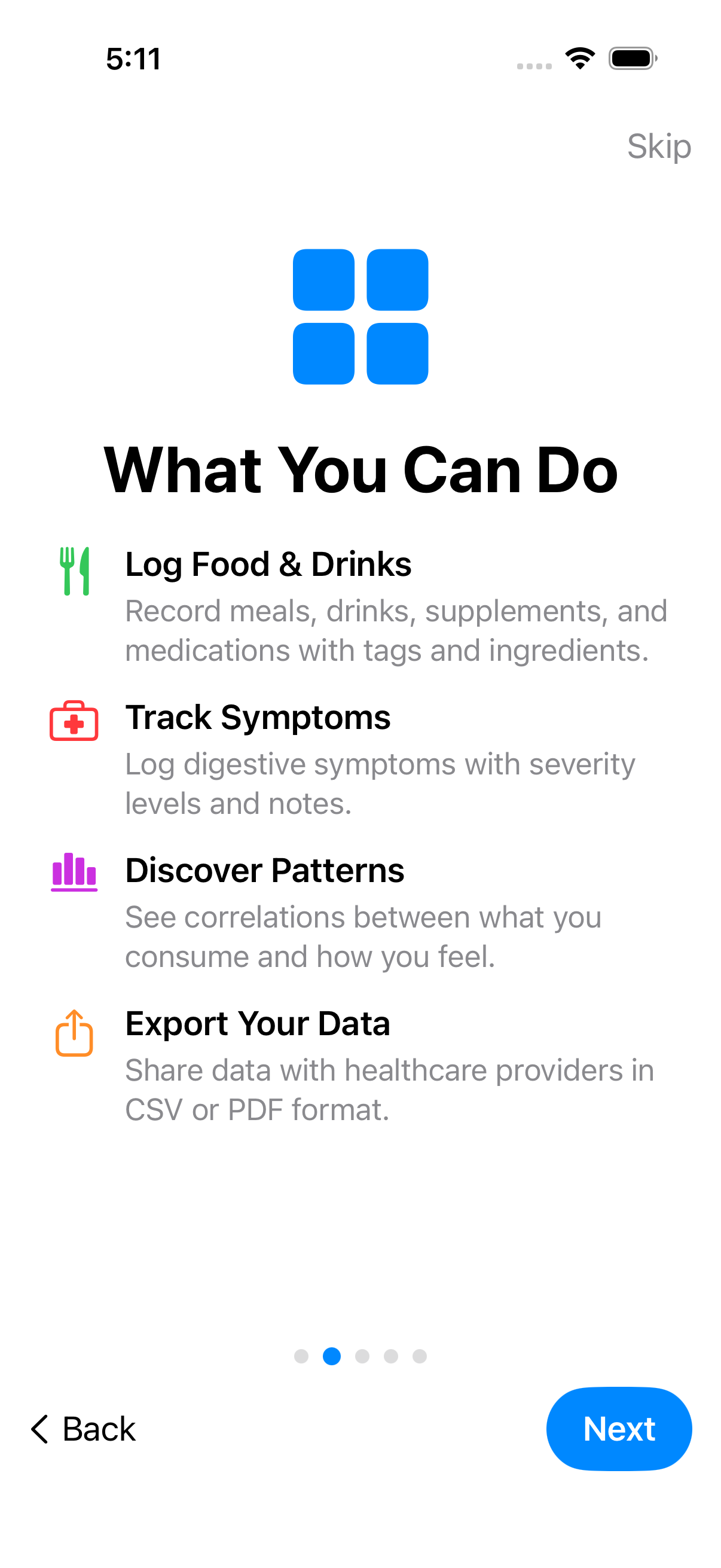 Intestigator helps you track meals, symptoms, and discover patterns
What You'll Discover
After a few weeks of consistent logging, you'll start seeing:
- Correlations — Which foods or drinks precede your symptoms
- Timing patterns — How long after eating your symptoms appear
- Trends — Whether symptoms are increasing or decreasing over time
- Spikes — Weeks when symptoms were unusually high
Prepare for Better Conversations
One of the most valuable things you can do is share your patterns with your doctor. Intestigator lets you export your data as a PDF or spreadsheet to bring to appointments. Instead of saying "I think dairy bothers me," you can show actual data: "Bloating followed 4 of my last 6 dairy meals within 3 hours."
What Intestigator Doesn't Do
Intestigator finds patterns in your data. It doesn't: - Diagnose conditions - Tell you what to eat or avoid - Provide medical advice - Replace talking to a doctor
The patterns you see are starting points for conversations with your healthcare provider, not conclusions.
Ready to get started? Head to Your First Steps.